Ransomware attacks on small businesses in Florida have increased significantly in recent years, and North Central Florida businesses are not immune. The misconception that cybercriminals only target large corporations is one of the most dangerous beliefs a small business owner can hold. In reality, small businesses are increasingly the preferred target precisely because they typically have weaker security but still hold valuable data and have the ability to pay a ransom.
$254K
Avg ransomware recovery cost
#3
Florida cybercrime ranking
91%
Attacks start with phishing
How Ransomware Attacks Unfold
Ransomware attacks follow a predictable pattern. Understanding each stage helps you see why layered protection — not a single product — is the only effective defense.
01
Phishing Email
An employee receives a convincing email with a malicious link or attachment. 91% of all ransomware attacks begin this way.
02
Initial Foothold
Malware is installed silently on the employee's device, establishing a connection back to the attacker's command server.
03
Lateral Movement
The attacker explores your network, escalating privileges and identifying high-value targets — file servers, databases, email systems.
04
Backup Destruction
Before encrypting anything, attackers locate and destroy or encrypt your backups to eliminate your recovery options.
05
Encryption
All accessible files across your network are encrypted simultaneously. Operations grind to a complete halt.
06
Ransom Demand
A ransom note demands cryptocurrency payment — typically $50,000 to $500,000 for small businesses — with a deadline and threats to publish stolen data.
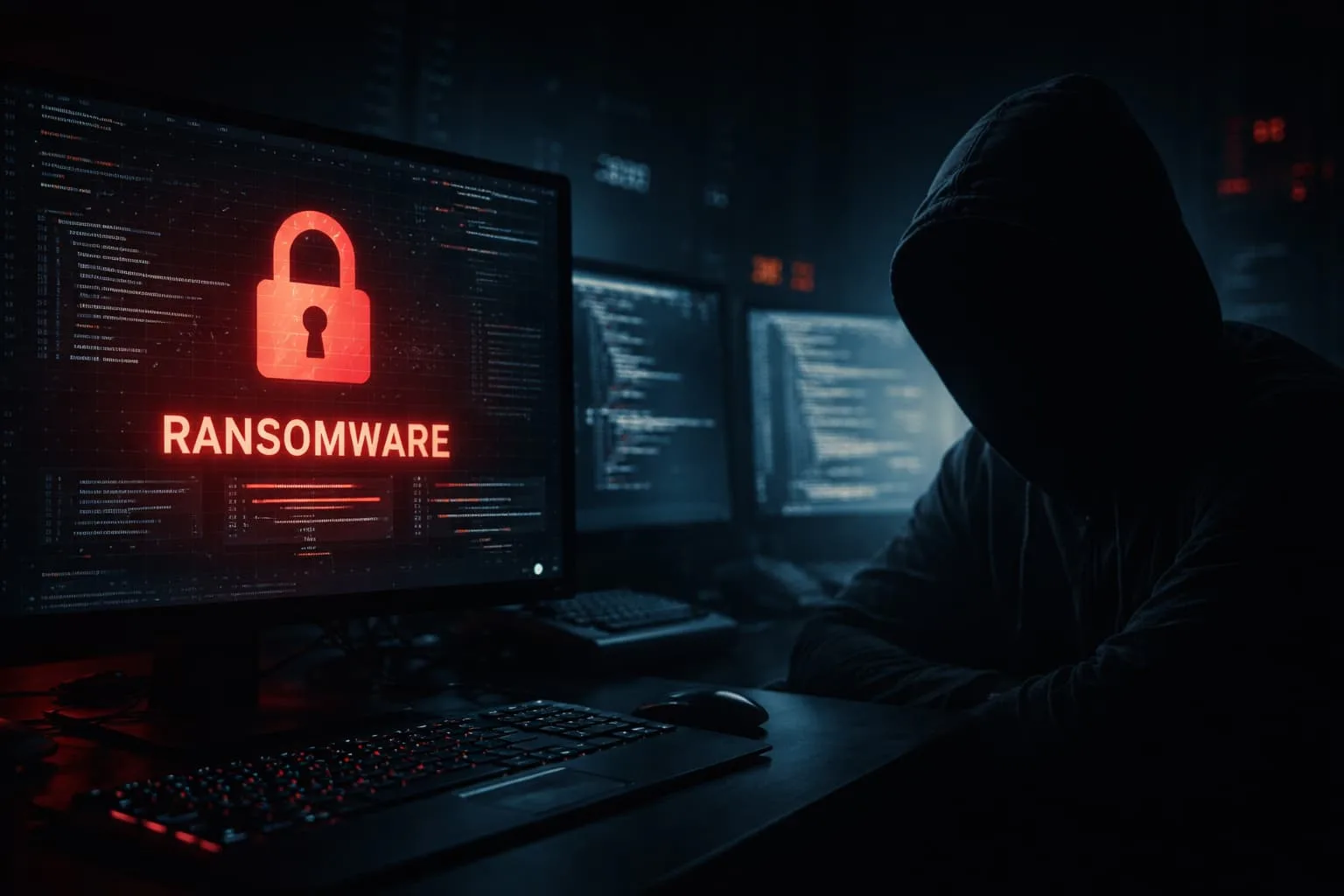
Florida ranks #3 nationally for cybercrime — small businesses are primary targets
Protected vs Unprotected: The Outcomes
| Outcome | Protected Business | Unprotected Business |
|---|
| Attack Blocked | Phishing caught by filters | Employee clicks malicious link |
| Lateral Movement | Detected and isolated | Spreads across network |
| Backups | Air-gapped, intact | Encrypted or destroyed |
| Downtime | Hours (restore from backup) | 21+ days average |
| Recovery Cost | Minimal — covered by plan | $254K+ average |
| Business Continuity | Operations resume quickly | 60% close within 6 months |
// Warning
Paying the ransom does not guarantee data recovery. The FBI advises against it — payment funds further criminal activity and there is no guarantee attackers will provide working decryption keys. Many businesses that pay never recover their data.
Layered Protection Components
Endpoint Protection
Advanced threat detection on every device that goes beyond traditional antivirus to catch zero-day attacks and fileless malware.
Email Security
AI-powered email filtering that blocks phishing attempts, malicious attachments, and impersonation attacks before they reach inboxes.
Multi-Factor Authentication
MFA on all accounts ensures that stolen passwords alone cannot grant attackers access to your systems.
Air-Gapped Backups
Immutable, offsite backups that cannot be reached or encrypted by attackers — your ultimate recovery option.
Security Awareness Training
Regular phishing simulations and training that turn your employees from your biggest vulnerability into your first line of defense.
24/7 Monitoring
Continuous network monitoring with automated threat response that detects and isolates suspicious activity in real time.
"The businesses that survive ransomware are not the ones who pay the ransom — they are the ones who never needed to."
Steve Condit, Simply IT
CHECK YOUR VULNERABILITY
Find out how protected your business is against ransomware and other cyber threats.
Ransomware Prevention Essentials
PREVENTION CHECKLIST
✓
Advanced endpoint protection on all devices (not just antivirus)✓
Email security filtering with phishing and impersonation detection✓
Multi-factor authentication on all accounts and remote access✓
Air-gapped, immutable backups tested monthly for recoverability✓
Security awareness training with regular phishing simulations✓
24/7 network monitoring with automated threat response✓
Patch management to close known vulnerabilities promptly✓
Written incident response plan with defined roles and procedures✓
Cyber insurance policy reviewed and current✓
DNS filtering to block access to known malicious domains// Key Takeaway
Ransomware is not a matter of if but when for unprotected businesses. The average recovery cost of $254,000 and 21 days of downtime can be avoided entirely with layered security, tested backups, and employee training. Prevention costs a fraction of recovery.
Simply IT provides security assessments for businesses across North Central Florida. If you're unsure whether your business is properly protected against ransomware, a free assessment is the best place to start.
Explore Security Solutions →