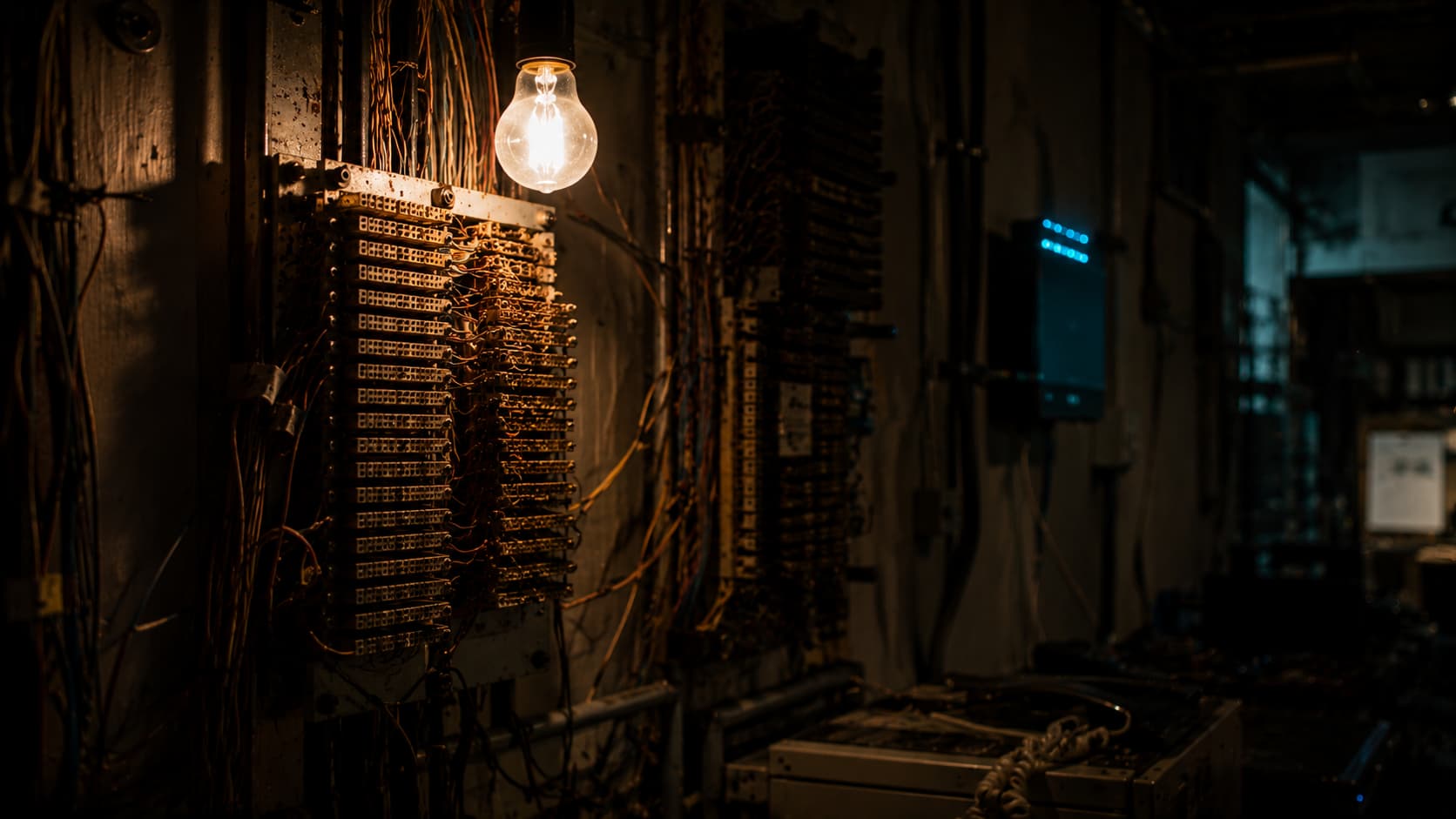
The POTS Line Sunset is Real — What Every Florida Business Still Using Copper Phone Lines Needs to Do Before August 2026
If your Florida business still has copper phone lines — the kind that hum quietly behind the fire alarm panel, dial out of the elevator emergency phone, or run that one fax machine the bookkeeper insists on keeping — the clock has nearly run out. Under FCC Order 19-72A1, the major carriers were authorized to retire copper Plain Old Telephone Service (POTS), and August 2026 is the hard cutover date for many North Central Florida exchanges. The carrier letter telling you your service is being decommissioned is not a negotiation — it is a notice.
What POTS Actually Is — And Why It's Being Retired
POTS — Plain Old Telephone Service — is the copper-pair analog phone service that has powered American business communication for over a hundred years. It runs on its own dedicated electrical loop, which is why it kept working when the building power went out. That single property — survives a power outage — is why fire-alarm dialers, elevator emergency phones, and alarm panels were standardized on copper for decades.
The copper plant is also expensive to maintain, ages out at scale, and serves a shrinking number of lines every year. The FCC's 2019 order (FCC 19-72A1) and the related forbearance rulings let AT&T, Verizon, CenturyLink, and the regional carriers retire copper service in favor of IP-based replacements. The carriers have been issuing exchange-by-exchange retirement notices ever since. North Central Florida exchanges have been working through the retirement queue, and a large block of Marion, Alachua, Sumter, and Lake County exchanges is scheduled for cutover by August 2026.
Who's Still On Copper Without Knowing It
Most businesses think they migrated off POTS years ago when they moved the office phones to VoIP. The office phones did move — but a half-dozen other devices in the building probably did not. The most commonly stranded systems we find on copper during pre-cutover audits:
- Fire alarm panel dialers: nearly every fire-alarm panel installed before 2018 in Florida commercial buildings has a copper-line dialer for central-station monitoring. NFPA 72 historically required two phone lines.
- Elevator emergency phones: ASME A17.1 requires a phone in every passenger elevator. The vast majority of installations from 2015 or earlier are copper.
- Burglar alarm panels: traditional alarm panels dial central station over POTS. Cellular and IP-monitored panels have replaced many, but plenty of small-business installations still ride copper.
- Fax machines: the one fax line in the office that the bookkeeper, the medical billing person, or the insurance coordinator absolutely will not give up.
- Credit-card terminals on dial-up: small retail and restaurant locations with older Verifone or Ingenico terminals that fall back to a dial-up connection when the internet drops.
- Hotel and motel ancillary lines: wake-up call systems, in-room emergency phones, gate intercoms, and pool-area emergency phones.
- Gate and access-control intercoms: apartment, storage facility, and gated-community intercom systems that ring a copper line to grant entry.
The Four Migration Paths
There is no one-size-fits-all replacement. The right path depends on the device, the life-safety regulations that govern it, and how your building's data connectivity is structured.
Life-Safety: The AHJ Sign-Off You Cannot Skip
For fire alarms and elevator phones specifically, swapping the device is not a unilateral decision. The Authority Having Jurisdiction — typically the local fire marshal for alarms and the state elevator inspector for elevators — has to approve the replacement device and the supervision path. NFPA 72 sets the technical bar for fire-alarm communicators; ASME A17.1 sets it for elevators. Skipping the AHJ approval can void your certificate of occupancy and create insurance exposure.
The practical sequence is: alarm or elevator contractor proposes the replacement device, you sign off on the proposal, the contractor files the modification with the AHJ, the AHJ approves (usually 2–6 weeks in our experience in Marion, Alachua, and Sumter counties), the contractor installs and tests, and the AHJ does a final acceptance test. Build the AHJ window into your timeline. It is the longest part of the project.
The Three Mistakes Florida Businesses Make
- Forgetting the credit-card terminal: a restaurant or retail location whose POS terminal silently falls back to dial-up when the internet drops will suddenly stop processing cards when the copper line dies. Audit every device before the cutover, not after.
- Skipping the fire-marshal review: swapping the fire-alarm dialer for a cellular replacement without an AHJ sign-off can void your CO and your insurance. Build the approval into the project timeline.
- Replacing one line at a time: doing this piecemeal is more expensive than auditing the whole building once and replacing in a coordinated sweep. Consolidate vendors, consolidate testing windows, consolidate AHJ filings.
What the Migration Actually Costs
For a typical small commercial building with one fire-alarm dialer, one elevator phone, two ancillary copper lines, and a fax line, total replacement costs land in the $1,500–$3,500 range one-time, plus $80–$200 per month in replacement-service fees. Compare that to the average POTS line cost of $80–$150 per month per line in 2026 (carriers have been raising copper rates aggressively as part of the retirement strategy), and most businesses break even within a year and save substantially after that.
If you have not already started a building audit, the right move is to do it now. Read our business VoIP phone system buyer's guide for the broader phone-system context, and the VoIP phones solution page for what a modern replacement deployment looks like.

Steve Condit founded Simply IT to bring enterprise-grade IT management to small and mid-sized businesses across North Central Florida. With over 30 years of IT experience and a background in the US Marine Corps, Steve built Simply IT around the principle that local businesses deserve the same quality of technology partnership that large companies take for granted — without long-term contracts or national call center support.
KEEP READING
RELATED SOLUTIONS & SERVICE AREAS
READY TO SOLVE YOUR IT CHALLENGES?
Get a free technology assessment and find out exactly where your business stands.