
Gainesville Biotech Startup & Research Spinoff IT — The Transition from University Infrastructure to Commercial Stack
Gainesville is one of the top university-research-spinoff hubs in the Southeast. Biotech, agtech, materials science, medical-device, and software spinouts incorporate every year out of laboratories and incubator programs in Alachua County. The pattern is consistent: a principal investigator or postdoc commercializes a piece of research, gets a provisional patent, files SBIR or STTR funding, and stands up a 3-to-10-person company inside an incubator office while still using university email, university SSO, university-provided cloud storage, and the university network. That works until it doesn't. The day the spinoff hires its first non-affiliated employee, signs its first commercial contract, files its first patent in the company name, or takes a Series A check, the university IT umbrella becomes a liability. The transition to commercial-grade IT is where most spinoffs get hurt — IP loss, lab notebook misplacement, fundraising-diligence findings, federal-funding compliance gaps. For the broader Gainesville business context, see our managed IT for Gainesville guide.
University IT vs. commercial IT — the boundary problem
While a spinoff is housed inside a university-affiliated incubator, the lines blur. The founder still has an active university email. The lab notebooks still live in a university OneDrive or Box tenant under the founder's university account. The university VPN works from the incubator office. The university network handles internet, printing, file storage, and authentication. None of this is technically wrong while the founder is still on faculty or in the lab — but the company is not the university, and the IP being developed in the company's name needs to live on the company's infrastructure, not on a research-institution's.
The clean separation has to happen on a defined timeline. The longer the spinoff waits, the harder the unwind — emails get archived in the university tenant, files accumulate in shared drives owned by university departments, and provenance for IP becomes murky. We've seen due-diligence findings during Series A where the investor's counsel asked the founder to produce evidence that specific IP lived in the company's control on a specific date, and the founder couldn't because the file history was on a university server he no longer had administrative rights to.
The cleanest path is: when the company hires its first non-founder employee, the company stands up its own Microsoft 365 or Google Workspace tenant, its own domain (the .com or .bio the company filed for at incorporation), and its own cloud-file home. Everything new lives there. Anything from the university that the company owns gets migrated under documented chain of custody.
The minimum security stack for a 3-10 person research spinoff
IP is existential for a research spinoff. The provisional patent, the lab notebooks, the assay data, the formulation files, the source code, the protocol documents — lose any of it and the company's valuation drops, the patent timeline gets compromised, or the work product becomes contested. The baseline security stack is not optional and not negotiable. It is also not expensive for a 3-to-10 person company:
Federal funding compliance overlays
A Gainesville biotech, medical-device, agtech, or defense-adjacent spinoff often takes early funding from federal sources — NIH SBIR/STTR, NSF I-Corps, DoD STTR, USDA NIFA, DARPA. The funding is great. The compliance overlays that ride along are easy to underestimate. Each program brings its own data-handling rules; some programs add ITAR (International Traffic in Arms Regulations) or EAR (Export Administration Regulations) implications when the underlying technology has dual-use or export-controlled elements. A handful trigger CMMC (Cybersecurity Maturity Model Certification) requirements when the funding comes through a DoD prime or a federal contract path.
The pattern we see most often in Gainesville is a spinoff that took NIH funding, then chased a follow-on DoD STTR, and is suddenly looking at CMMC Level 2 with a third-party assessment (C3PAO) requirement on a 12-month timeline. The minimum-security stack above is necessary for CMMC but it is not sufficient — CMMC adds NIST 800-171 control coverage, FIPS 140-validated encryption, GCC or GCC High tenancy for Microsoft 365 in many cases, and detailed System Security Plan documentation. For the deep reference, see our CMMC compliance guide for Florida defense contractors.
The earlier the compliance question gets surfaced — ideally at the time the funding application is being written — the easier and cheaper the build-out. The later it gets surfaced, the more expensive the retrofit.
Fundraising-diligence IT readiness
Series A and later rounds increasingly include cybersecurity diligence as a standard part of the data room. The investor's counsel or a hired diligence firm asks for evidence of the security posture, the IP handling, the access controls, the breach history, and the compliance status with any applicable regimes. For a Gainesville biotech that did not stand up commercial-grade IT until the term sheet was on the table, this is where the round slows down. For a company that built the stack on day one, it's a 60-minute conversation.
A clean diligence data room contains: the company's tenant configuration export, the MFA enforcement evidence, the BitLocker / FileVault encryption evidence, the access-log retention setting, the backup architecture description with last-restore-test date, the BAA register if any healthcare data is involved, the documented departure protocol, the incident response runbook, the SOC 2 readiness status (if pursued), the CMMC readiness status (if applicable), and the compliance posture for every federal funding source.
Fractional CISO vs. basic managed IT
A 5-person spinoff with no federal funding, no PHI, and no CMMC obligations does not need a CISO. It needs a HIPAA-aware or research-aware managed IT provider that can stand up the baseline stack, document it, and operate it. That is the Simply Managed or Simply Secure tier for most early-stage spinoffs.
A 15-person spinoff with NIH funding, DoD-adjacent technology, and a Series A target inside 18 months does need fractional CISO involvement. The vCISO writes the policies that the diligence firm will read, runs the risk-based decision-making that the board will rely on, owns the relationship with the C3PAO when the time comes, and translates compliance language into the engineering work the managed-IT layer executes. See our vCISO services for Florida small business guide for the full framework.
If you are commercializing research out of Gainesville
The right time to stand up the company's own commercial-grade IT stack is at incorporation, not at the first investor pitch. The right time to surface the federal-funding compliance overlays is when the application is being written, not when the C3PAO calls. The right time to start the BAA register and IP-protection baseline is day one, not the day before due diligence opens.
Simply IT works with Gainesville biotech, medical-device, agtech, and software spinoffs on exactly this transition — standing up the commercial-grade Microsoft 365 tenant, the security baseline, the device-management framework, the backup architecture, and the documentation that makes fundraising diligence a 60-minute conversation. For the full Gainesville context including geography and response coverage from Ocala, see our managed IT for Gainesville guide. For the CMMC overlay if federal funding is in the picture, see our CMMC compliance guide. To start with a no-obligation written assessment of your current posture, request a free Gainesville IT readiness assessment.
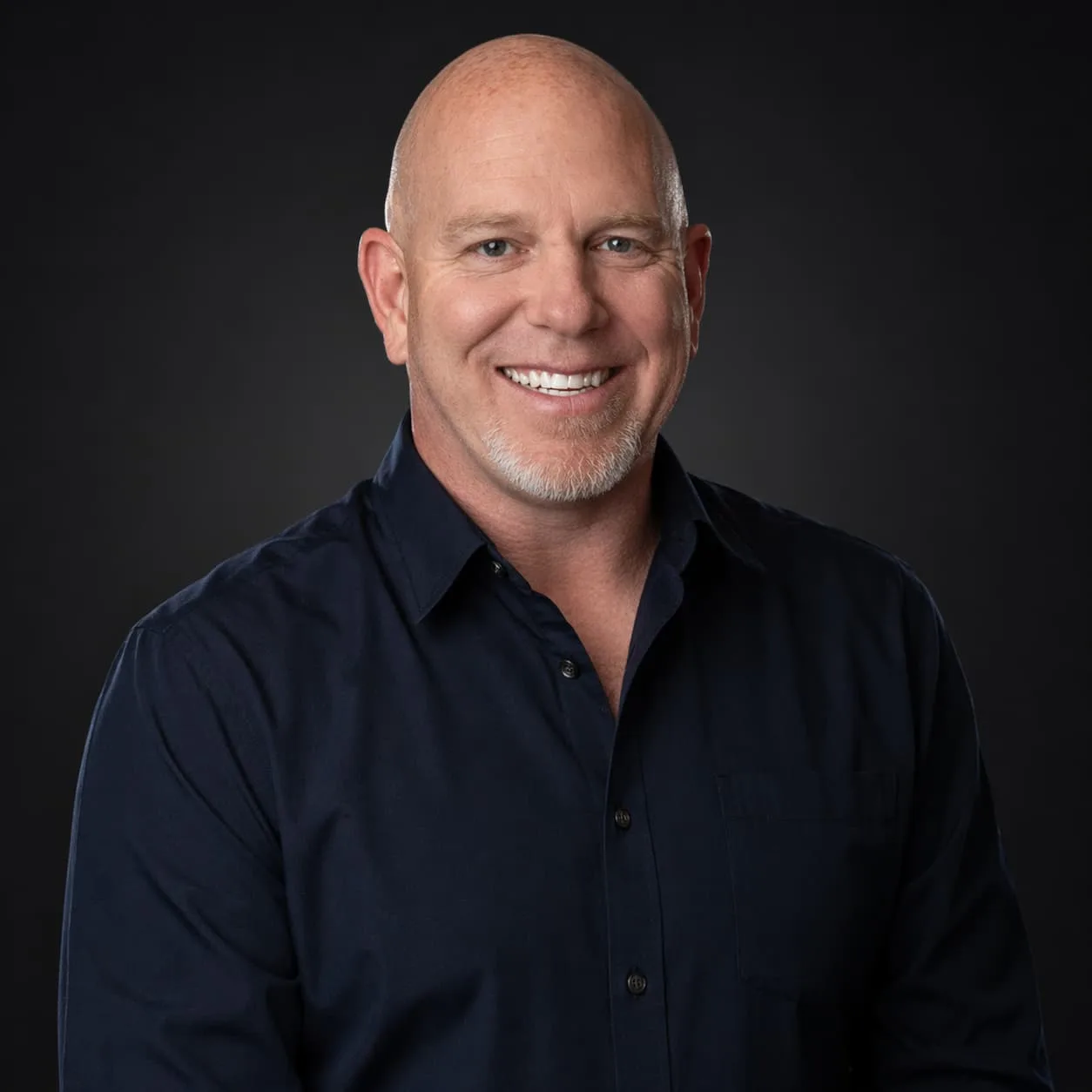
Steve Condit founded Simply IT to bring enterprise-grade IT management to small and mid-sized businesses across North Central Florida. With over 30 years of IT experience and a background in the US Marine Corps, Steve built Simply IT around the principle that local businesses deserve the same quality of technology partnership that large companies take for granted — without long-term contracts or national call center support.
KEEP READING
RELATED SOLUTIONS & SERVICE AREAS
READY TO SOLVE YOUR IT CHALLENGES?
Get a free technology assessment and find out exactly where your business stands.