
Choosing a Managed IT Provider for The Villages — The 6 Local-Fit Questions Senior-Focused Practices Should Ask
The Villages is unlike any other business community in Florida. 130,000+ active residents averaging 73 years old, a dense ecosystem of medical, dental, legal, financial, and concierge services built to serve them, and a 3-county footprint (Sumter, Lake, Marion) that makes “local IT” a more complicated question than it sounds. Choosing the wrong managed IT provider for a Villages practice produces a particular set of compounding problems: response times that look fine on paper but stretch to 45-60 minutes in reality, compliance gaps that surface only when an OCR or Bar complaint arrives, and patient/client experience friction that erodes referrals in a community where word-of-mouth carries unusual weight. Below are the 6 questions every Villages business owner should ask any managed IT provider before signing. The answers reveal whether the provider actually understands the Villages context or just sees it as another zip code. For the full local context, start with our Villages managed IT guide, and for the broader 2026 buyer's framework see our how to choose a managed IT company in Ocala reference.
Question 1: “How Fast Can Your Technician Actually Be On-Site in Brownwood Paddock or Lake Sumter Landing?”
Drive time is the first honesty test. Many Florida MSPs claim a “Villages service area” while operating out of Orlando, Tampa, or Jacksonville. From an Orlando office to Brownwood Paddock is 70 minutes in light traffic and 100 minutes during snowbird-season afternoons. A “1-hour on-site SLA” from those locations is mathematically impossible.
- What good sounds like: “Our nearest field technician is based in Ocala / Wildwood / Leesburg. Typical drive time to Lake Sumter Landing is 25-35 minutes. Brownwood is 30-40 minutes. We'll show you the technician's home base on a map.”
- What bad sounds like: “We have a Florida-wide service area” or “Same-day on-site response” without a specific drive-time commitment to your actual address. Ask for the dispatch address. If they won't share it, that's your answer.
Question 2: “Have You Worked With Villages Medical or Dental Practices Specifically?”
HIPAA compliance is the same statute everywhere — but the operational realities of a Villages medical or dental practice are different. The patient population is older, often with hearing impairment that changes phone-system requirements. Family caregivers (adult children) are often in the room during visits, which complicates Privacy Rule disclosure boundaries. Patient texting and portal adoption rates skew lower than a millennial-heavy practice in Tampa — reminder workflows and after-visit communication have to be channel-appropriate. An MSP that has never worked with a Villages medical practice will miss these nuances.
- What good sounds like: “We currently support [X] practices in The Villages including [specialties]. Here are 2-3 references you can call. We've walked clients through HIPAA Security Risk Assessments, BAA execution, M365 BAA activation, and OCR letters when they've arrived.”
- What bad sounds like: “We're HIPAA-compliant” (an MSP cannot be HIPAA-compliant — only a covered entity can be), or “We've worked with medical practices in Florida” without specifics. For the framework here see our HIPAA secure texting for Florida medical practices guide.
Question 3: “What's Your Hurricane Continuity Plan for a Villages Client?”
The Villages is inland but every June through November the question is live. A good MSP has a documented hurricane response plan they execute with every client every year, not a reactive scramble when a named storm forms. The plan should layer 5 things: a pre-season tabletop drill (we walk this through in our Villages hurricane IT tabletop post), dual-WAN failover that survives a Spectrum or Comcast outage, generator-aware power planning, cloud-backed business continuity so a damaged office isn't a closed business, and a documented post-storm verification runbook.
- What good sounds like: “Here's the pre-season checklist we run with every client by May 15. Here's how dual-WAN failover is configured. Here's the post-storm runbook. Here's what we covered last year and what we'd adjust this year.”
- What bad sounds like: “If there's a storm, we'll let you know” or vague reassurances about “cloud backup.” Cloud backup is one slice of one layer. Real continuity is the whole stack.
Question 4: “Will You Sign a BAA, and Have You Activated the Microsoft 365 BAA Before?”
If you're a covered entity under HIPAA (medical, dental, behavioral health, chiropractic, optometry), your MSP becomes a business associate the moment they have access to your systems. They must sign a BAA. That part is non-negotiable. The follow-up — have they actually activated the Microsoft 365 BAA in your tenant before — is where the experienced providers separate from the rest. Microsoft 365 supports HIPAA, but the BAA is a separate document that has to be accepted inside the M365 admin center. We routinely audit Villages practices that have been on M365 for 3+ years with the BAA never activated. That's a documented gap any OCR investigator will find in 90 seconds.
- What good sounds like: “We sign a BAA before any technical access. We've activated the M365 BAA dozens of times. We'll audit your current tenant on day 1, document what's in place, and fix what's missing. We also handle the EHR vendor, the patient-texting vendor, and the backup vendor BAA inventory as part of onboarding.”
- What bad sounds like: “What's a BAA?” (you'd be surprised), or “We don't sign BAAs — that's on you.” The latter is non-compliant. For more depth see when you actually need a Business Associate Agreement.
Question 5: “Who Is the Named Technician Who'll Know My Account?”
This is the question that matters most for senior-focused practices and it's the question owners almost never ask. The dominant MSP model in 2026 is “ticket-queue” service: you call a number, get a ticket, and a rotating cast of technicians works whatever's at the top of the queue. That model is efficient for the MSP. It is awful for senior-population client experience. Your front-desk lead expects to talk to the same person who set up the EHR last quarter. The doctor wants to call “Mike” not “help@msp.com.” A 78-year-old patient watching the front desk struggle with the printer doesn't respond well to “I have a ticket in but I'm not sure when they'll get back to us.”
- What good sounds like: “You have a named primary technician and a named backup. They know your environment, your EHR / case management system, your phone system, and your team. When you call, they answer. The call-center routing is for after-hours overflow only.”
- What bad sounds like: “Our call center handles all incoming tickets and dispatches the next available technician.” That's a scale model. It's not a Villages fit.
Question 6: “What Does the Typical Villages Medical / Dental / Legal Client Invest Per Month?”
Transparent pricing is the fastest way to spot a fit. An MSP who can't name a number until they've done a “custom proposal” is usually either selling you on emotion or hiding the per-user math. Real per-user pricing in 2026 looks like the following. Our published pricing is Simply Managed at $75 per user per month for core managed IT, Simply Secure at $125 per user per month adding the full security stack, and Simply Compliant at $150 per user per month for practices in HIPAA, FTC Safeguards, or Bar-regulated environments. No long-term contracts, month-to-month, no “5-user minimums” that punish small practices, and the line-item adds (M365 licensing, hardware, projects) are quoted separately and clearly.
- What good sounds like: Published per-user pricing tiers, transparent line items, no surprise renewal escalators, no multi-year lock-in, and a written quote you can compare side-by-side.
- What bad sounds like: “It depends — let's talk about your needs first” followed by a custom proposal that bundles everything into one obscured monthly number. That bundling is where the margin hides.
The Order to Ask Them In
In a first call, ask them in this order:
- Open with Question 6 (pricing): If they can't name a number, end the call. Move to the next provider.
- Then Question 1 (drive time): If their dispatch office is more than 45 minutes from your door, end the call. The on-site SLA is fiction.
- Then Question 5 (named technician): If it's a call-center / ticket-queue model, end the call — or accept that your senior patients will feel it.
- Then Question 2 (Villages-specific experience): References, not generalities. Ask to call one.
- Then Question 4 (BAA experience, if you're a covered entity): The M365 BAA question is the killer. They either have or they haven't.
- Close with Question 3 (hurricane plan): If the answer is “we'll figure it out when one comes,” you have your answer.
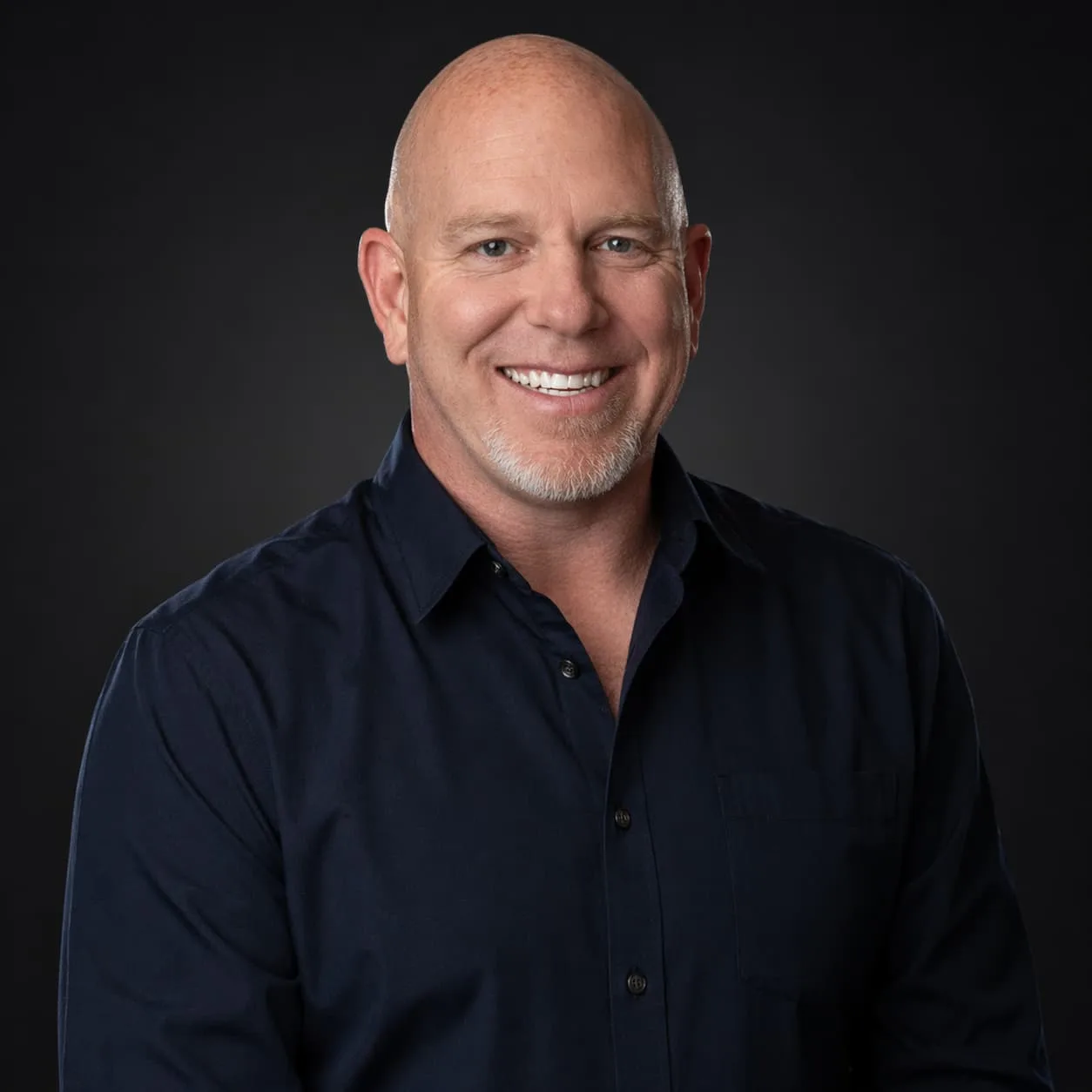
Steve Condit founded Simply IT to bring enterprise-grade IT management to small and mid-sized businesses across North Central Florida. With over 30 years of IT experience and a background in the US Marine Corps, Steve built Simply IT around the principle that local businesses deserve the same quality of technology partnership that large companies take for granted — without long-term contracts or national call center support.
KEEP READING
RELATED SOLUTIONS & SERVICE AREAS
READY TO SOLVE YOUR IT CHALLENGES?
Get a free technology assessment and find out exactly where your business stands.