
FTC Safeguards Rule Coverage for Florida Insurance Agencies — Why Most Agencies Don't Realize They're Covered (and What to Do About It)
Most Florida insurance agency principals heard “FTC Safeguards Rule” for the first time when an enforcement letter landed at a competitor in 2024 or 2025. The Rule covers “financial institutions” — a term that, in 16 CFR 314.2, the FTC defines so broadly it sweeps in nearly every independent insurance agent, broker, and producer in the state. If your agency collects social security numbers, drivers' licenses, dates of birth, financial account information, or claims history, you are a financial institution under federal law — whether you call yourself one or not. Here's the 9-element WISP applied to insurance, what an FTC investigation actually looks like in 2026, and how to close the gap before enforcement finds you. For the line-by-line implementation reference, read our FTC Safeguards implementation guide (written for CPA firms but the framework is identical for any covered financial institution).
Why Insurance Agencies Are Covered — The Definition Most Agencies Miss
The trap is the word “financial institution.” Most Florida agency owners hear that phrase and picture banks. The FTC's definition at 16 CFR 314.2(h) is far broader: any business that engages in activities “financial in nature” as listed in section 4(k) of the Bank Holding Company Act. The activities expressly listed include insurance underwriting and insurance agency activity. The FTC's 2023 amendment and the Commission's plain-English guidance confirm that the following Florida businesses are all financial institutions under the Rule:
- Independent P&C agencies: auto, home, commercial, umbrella — whether captive or independent.
- Life and annuity agents: writing applications that capture SSN, DOB, beneficiaries, medical history, financial information.
- Health agents and Medicare brokers: Marketplace plans, MAPD, Med Supp, group health — especially Medicare Advantage which collects extensive PHI alongside financial data.
- Employee-benefits brokers: handling SSN, DOB, dependent data, and financial elections for group clients.
- Surplus-lines brokers and MGAs: any role in the application chain that touches consumer financial information.
- Premium-finance affiliates: almost universally covered — this is core consumer financial activity.
The narrow exemption (fewer than 5,000 consumers' nonpublic personal information) helps almost no Florida agency. A 3-person personal-lines shop in The Villages crosses 5,000 in less than a year. If you're reading this and wondering whether you're covered, the safe assumption is yes.
The Specific Data Triggers Inside an Insurance Agency
The Rule attaches to “customer information” — any record about a consumer that contains nonpublic personal information. Inside a typical Florida agency, that includes:
- SSNs collected on life applications, group enrollments, Medicare apps
- Drivers' license + DOB captured for auto quotes and MVR pulls
- Financial-account numbers used for premium-finance authorizations and EFT setup
- Claims history pulled from CLUE/A-PLUS during quoting
- Medical information collected for life underwriting (HIPAA may also apply here)
- Beneficiary SSNs and dates of birth captured for life and annuity policies
The 9 WISP Elements Applied to a Florida Insurance Agency
The Rule requires a written information security program (WISP) with 9 specific elements. Here's how each lands for an insurance agency in practice:
What an FTC Investigation Actually Looks Like in 2026
The FTC almost never shows up unannounced. The trigger is usually one of three things: a consumer complaint, a breach notification under state law that the FTC then picks up, or a referral from a state regulator (in Florida, the Department of Financial Services). Once an investigation is opened, the sequence is:
- Data call: The FTC requests written copies of your WISP, your risk assessment, your training records, your IR plan, vendor list with executed security agreements, and access logs for the period under review. Response time: typically 30 days.
- Document review: The Commission's technology counsel reviews everything and identifies gaps. If your WISP is missing 4 of 9 elements, that's 4 separate findings on the record.
- On-site or remote interviews: Interviews with the Qualified Individual, the agency principal, IT staff (or MSP), and sometimes line staff to verify the WISP actually reflects how the agency operates.
- Consent order: Most enforcement ends in a consent order requiring 20 years of audited compliance, mandatory annual reporting to the FTC, and civil penalty. Recent settlements have hit $5M-$50M for larger institutions; small agencies typically see six-figure penalties plus the long-tail compliance cost.
The Three Areas Insurance Agencies Almost Always Fail
After remediating dozens of Florida agencies, three failures show up almost universally:
- Vendor inventory of carrier portals: Producers log into 30+ carrier portals across the year. Each one is a service-provider relationship under Element 5. Almost no agency has documented oversight of those portals.
- MFA on the AMS: Many AMS platforms still default to password-only. Element 3 requires MFA on systems containing customer information. This is fixable in a day — almost no agency has done it.
- Written incident response plan: Element 7 requires a written plan. “We'd call our MSP” isn't a plan. The written plan has to cover detection criteria, decision rights, notification triggers (including the FS 501.171 30-day clock), and post-incident review.
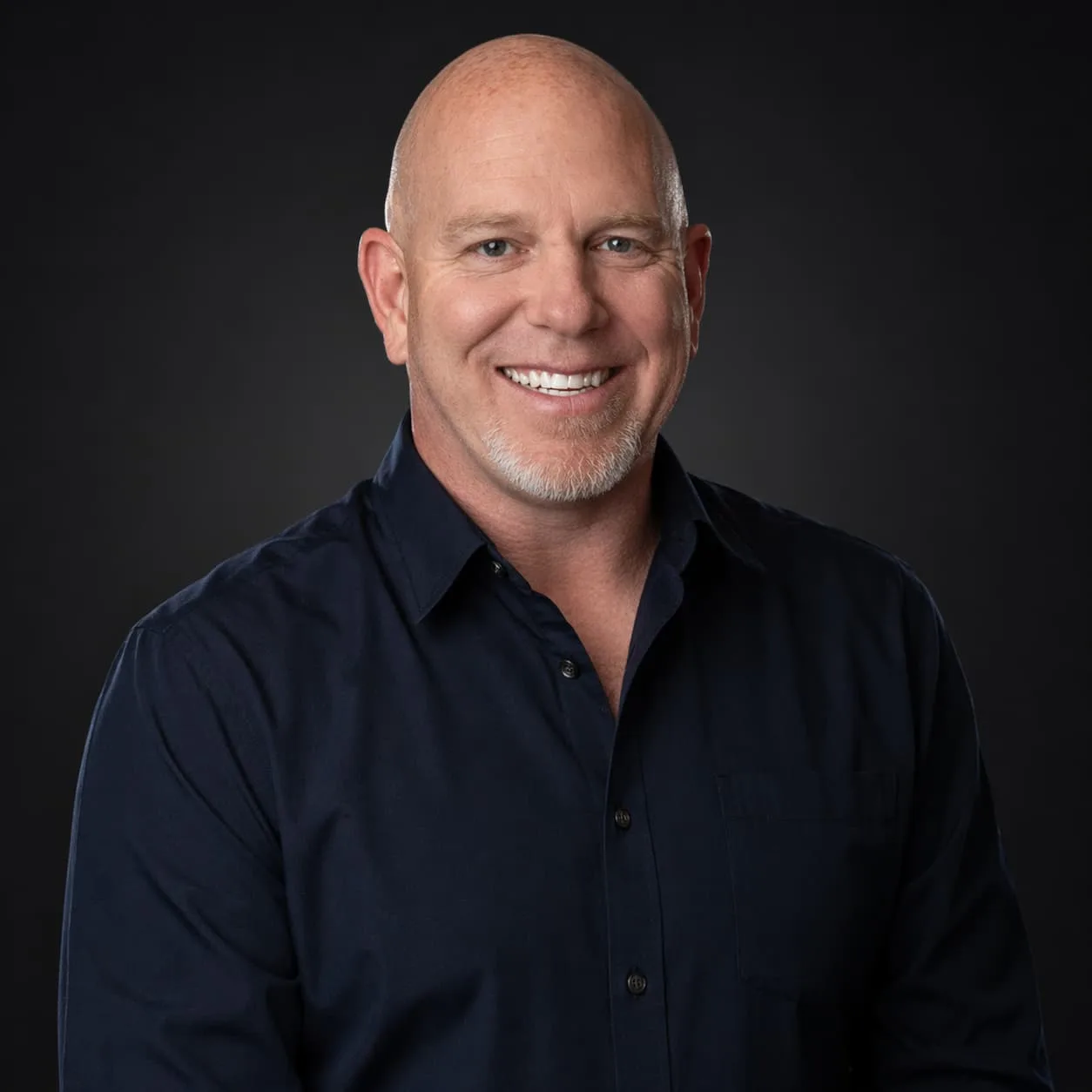
Steve Condit founded Simply IT to bring enterprise-grade IT management to small and mid-sized businesses across North Central Florida. With over 30 years of IT experience and a background in the US Marine Corps, Steve built Simply IT around the principle that local businesses deserve the same quality of technology partnership that large companies take for granted — without long-term contracts or national call center support.
KEEP READING
RELATED SOLUTIONS & SERVICE AREAS
READY TO SOLVE YOUR IT CHALLENGES?
Get a free technology assessment and find out exactly where your business stands.